Systemic Change Photography Prize
In partnership with Social Documentary Network (SDN), the FSC has created the Systemic Change Photography Prize for the 5th year in a row.
Past Winners

At the end of their patrol, the Santa Rosillo Forest Guardians strip down, put on a few traditional accents, and excitedly ask for a portrait. They are proud of what they do and the status it has given them in the community. Since being recognized by local officials, it has forced the campesinos to treat them and the land with more respect. With so much out of their control, the patrol has been an opportunity for empowerment and self-determination. This image was taken in the buffer zone of Cordillera Azul National Park outside of Santa Rosillo, San Martin, Peru in December 2022. Photo by Sarah Fretwell.
2025 WINNER:
Healing Wounds: Reconciliation in Post-Genocide Rwanda
Rose Mukarusagara (60) lost her two eldest children and almost her entire family during the genocide. On April 10, 1994, a group, including Ezechiel Niyibizi (46), attacked her, killed her baby, her sister-in-law, and left Rose severely injured. Her right hand still shows the scars. In 2014, Rose joined CBS Rwanda’s sociotherapy, seeking healing. During the sessions, Ezechiel apologized for killing her baby, and eventually, she forgave him. Photo by Jan Banning.
ABOUT HEALING WOUNDS: RECONCILIATION IN POST-GENOCIDE RWANDA
Thirty years after the 1994 Rwandan genocide, remarkable partnerships have emerged: survivors reconciling with those who killed their loved ones—a profound journey toward healing.
During the genocide, 800,000 people were killed in 100 days, often by neighbors using crude weapons. Survivors bear deep scars, while perpetrators wrestle with guilt. Photographer Jan Banning and writer Dick Wittenberg spent a month meeting pairs of former enemies who reconciled, revealing stories of immense suffering and forgiveness.
Over 20% of Rwandans face trauma, with rates exceeding 50% among survivors. To address this, CBS Rwanda introduced a community-based sociotherapy program in 2005. More than 64,000 participants, supported by 1,000 trained volunteers, engage in sessions blending safety, care, and storytelling. Singing, dancing, and shared narratives foster trust and empathy.
Many perpetrators express remorse, and 80% of groups continue meeting, maintaining transformative bonds and rekindling friendships.While the scars of genocide remain, Rwanda demonstrates that even the most divided societies can begin to heal.
ABOUT JAN BANNING
Jan Banning is an independent Dutch photographer based in the Netherlands. Banning was born to parents from the Dutch East Indies (present-day Indonesia) and studied social and economic history. Both his background and academics have strongly influenced his photographic work, whether expressed in his choice of subjects or the historical aspects of his themes. In his photographic work, the socio-political context is generally at the forefront, and he often chooses subjects that are difficult to visualize: state power, the long-term consequences of conflicts, and criminal justice. Sometimes, his work is the result of an approach that relies on sociological or anthropological classification; at other times, it focuses more on the individual psychological impact of major social events. Research plays a significant role in his work as it is the sound intellectual foundation of his projects. Banning frequently conceptualizes his approach and uses a typological method: visual research in which he looks for variations within a tightly repeated form. Banning occasionally describes himself as an ‘artivist,’ not satisfied with merely visualizing themes through documentary work but also striving to bring about change using both his work and his reputation. His work has been showcased in countless collections and exhibitions across the world and has been published in more than a dozen photobooks and by many media outlets.
The 2024 Systemic Change Photography Prize goes to Sarah Fretell for Guardian of the Forest, Peru
Apu Quinto Inuma was a former lumber trafficker turned park ranger turned rogue Forest Guardian. He became a tireless international advocate for the environment and Native rights and his community of Santa Rosillo in the Amazon of Peru.
To prevent the devastation of land, logging, and drug cartels operating in neighboring communities, Quinto organized other Natives to patrol the forest even after the government denied their ancestral rights to the territory. They worked to protect their children's future and “their brothers who could not speak” — the trees of the forest.
With old guns, machetes, and rubber boots, the volunteer Forest Guardians risk their lives to monitor the buffer region of Cordillera Azul National Park beside their village in San Martin. On patrols, they look for new burn and grow areas, document it with cell phones, and send the notes back to local officials. Struggling to survive in this remote region, many people here work for illegal logging and drug cartels.
In November of 2023, Quinto was shot and killed in retaliation for his environmental work.
His spirit still lives on in the forest.

.
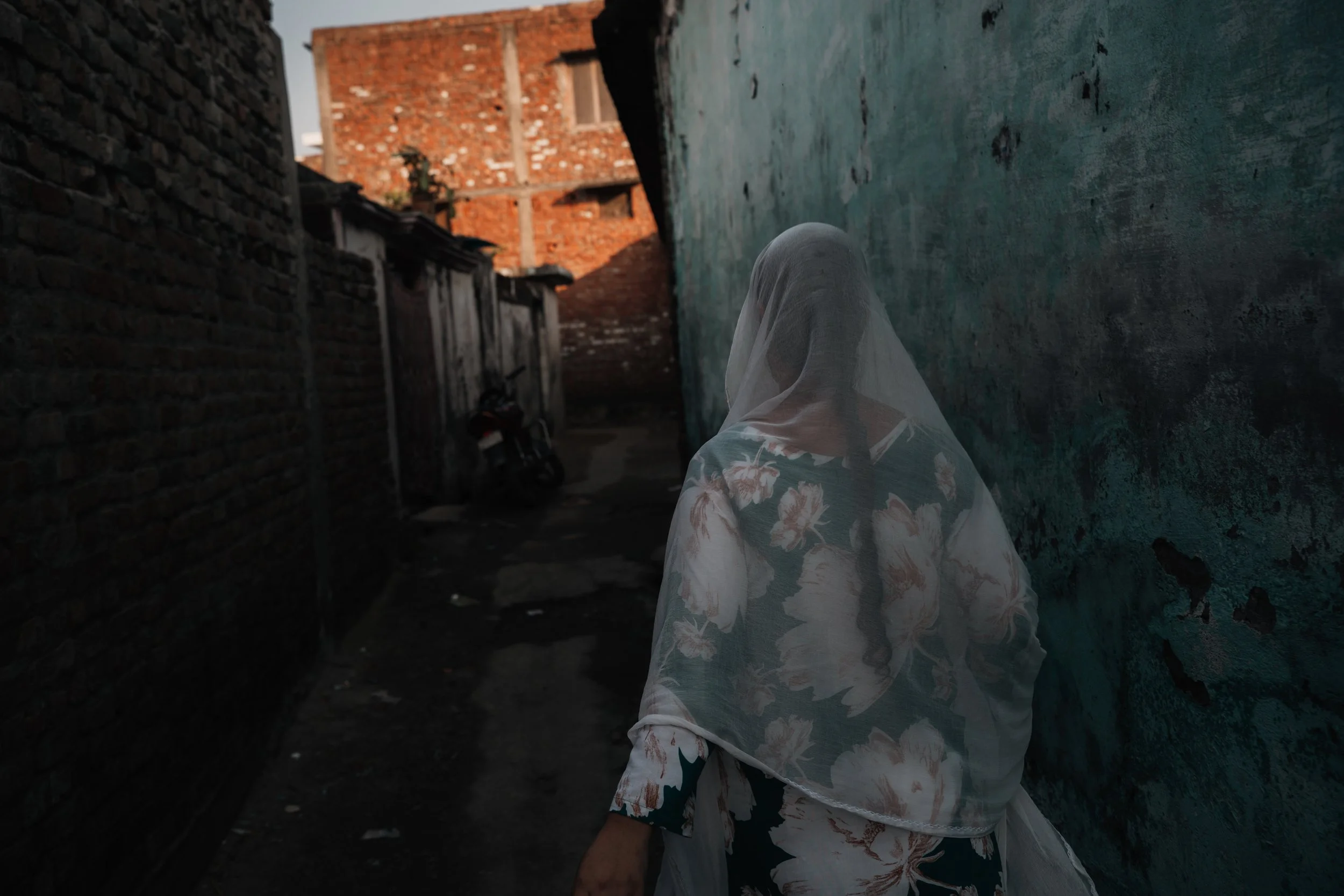
Menstruation is a physiological process, but despite being universal– influencing psycho-physical well-being, reproductive health, education, work, and spiritual life– it remains surrounded by taboos and stigma rooted in mythology, religion, medicine, and culture. These prejudices have tangible consequences, turning periods into an invisible, underestimated issue.
Out for Blood documents the most extreme consequences of this reality in India: period poverty, defined as limited access to safe menstrual products, adequate sanitation, and education.
Of approximately 355 million women of reproductive age, only 45% are aware of menstruation before menarche (first menstrual period). Many still rely on cloths– a non-hygienic practice risking infections. 24% of girls drop out of school after menarche due to inadequate sanitation.
Through voices from Hindu, Muslim, and Adivasi communities, the project documents lives and environments while addressing inequality, violence, taboos, sustainability, and healthcare access. This is not solely a public health issue but a human rights concern, as menstruation functions as a tool of control over women's bodies.
The project aims to foster awareness and self-determination, reclaiming the body as a site of struggle, resistance, and liberation.
Ginevra Bonina is an Italian documentary photographer, writer, and producer. Born in Catania, Sicily, she holds a Master’s degree in Languages, Economics, and Institutions of Asia and North Africa from Ca’ Foscari University of Venice (2017). In 2024, she completed a Masterclass in Photo and Video Journalism with the Italian news magazine InsideOver and joined the Canon Student Development Program. Based in Geneva, Switzerland, since 2019, Ginevra works as a freelance photographer and video-maker, balancing commercial assignments with personal, long-term projects focused on women’s and minority rights, feminist issues, and spirituality. Her practice combines a documentary approach with a poetic and symbolic visual language, often informed by anthropology and storytelling.